
Pharmacists, pharmacy technicians and pharmacies are taking on wider responsibilities and providing more services as pharmacy practice rapidly evolves. While these changes will improve access to healthcare for patients, they are also increasing the work the GPhC needs to do to effectively regulate pharmacy and support pharmacists and pharmacy technicians to deliver safe practice.
The GPhC Council agreed at its March meeting that an increase in fees was necessary, as the organisation’s workload and costs have continued to significantly increase as it regulates in this rapidly changing healthcare environment.
The GPhC has seen a striking increase in the number and complexity of concerns raised by the public and others with almost 9,750 concerns received in 2025-26 so far, an increase of 77% since 2023-24.
Inspection activity has also increased by over 60% since 2023/24 with almost 2000 inspections expected to be delivered this year. Inspectors are also increasingly providing guidance and support to pharmacies outside of inspections, with over 600 regulatory contacts with pharmacies being made this year. In addition, the GPhC is reviewing its current standards and developing new standards for Superintendent Pharmacists and Responsible Pharmacists, to ensure they safely deliver developments in their practice.
Fee levels
The fee for pharmacists will increase by £17 a year to £310, pharmacy technician fees will increase by £8 a year to £146 and pharmacy premises fees by £25 a year to £441. This equates to a £1.42 a month increase for pharmacists, a 67p a month increase for pharmacy technicians and a £2.08 a month increase for pharmacy premises.
The Council has also set out its intention to move to a more regular and incremental approach to fee increases, aligned with inflation in future years, to avoid the need for large increases. It will also review and consult on the way pharmacy premises fees are set to reflect changes in the sector.
Kathie Cashell, Chief Executive of the General Pharmaceutical Council, said:
“As the incoming Chief Executive, I am committed to making sure the GPhC delivers its vital work as efficiently as possible. We have already delivered savings of £700,000 and set a target to make total savings of at least £1.5 million by 2028 so we can respond to the significant increases in demand and avoid large fee increases in the future.
“We understand the financial pressures facing pharmacists, pharmacy technicians and pharmacy businesses, and our Council has not taken this decision lightly. Pharmacy is changing rapidly, and our work is more important than ever. This increase will help to ensure the GPhC is in a strong financial position to respond to those demands.
“We will shortly publish our delivery plan for 2026/27 which sets out the important work we will deliver over the next year to respond effectively to developments in practice and improve how we protect the public and empower pharmacists and pharmacy technicians though effective regulation.”
Tax relief on fees
The GPhC has created a guide to explain how pharmacists and pharmacy technicians can claim tax relief from HMRC on their GPhC annual registration fee, saving a pharmacist on the basic income tax rate £62 a year and a pharmacy technician £29.20 on the fees for September 2026 onwards. The GPhC will be writing to pharmacists and pharmacy technicians to explain how to claim this tax relief. If they have not already claimed in previous years, they can claim tax relief for this year and the last four financial years.
Delivery plan
At the March Council meeting, the Council also agreed the budget and the delivery plan for 2026/27, which will be published shortly and sets out what the GPhC will deliver over the next year, and how fees will be used.
Key priorities include:
- Implementing improvements to enforcement processes, systems and governance to improve timeliness, consistency and value for money.
- Consulting on and publishing new superintendent and responsible pharmacist standards and reviewing the standards for registered pharmacies and pharmacy professionals.
- Making further improvements to our revalidation model, to support pharmacists and pharmacy technicians to meet revalidation requirements
- Strengthening our risk-based approach to inspection, to further improve consistency, timeliness and assurance.
Notes to editors
- The paper considered by the Council setting out the context and explanation for this fee increase is available on the GPhC website
- The GPhC consulted on these fee increases in Spring 2025.
- The GPhC has kept fees for pharmacists and pharmacy technicians as low as possible by absorbing inflation and other cost pressures in order to freeze or reduce fees in ten out of the last fifteen years. Including the fee increases in September 2026, the average annual increase since the GPhC was established in 2011 is just 1.13% per year for pharmacists and 0.19% per year for pharmacy technicians.
-
The GPhC’s strategic plan for 2025-30 includes a cost‑reduction target of at least £1.5m within the first three years, building on the efficiencies already achieved through updated accommodation arrangements, increasing the number of remote events, and greater use of digital tools. To date, £0.7m of these savings have been achieved through contract reviews, assessing workforce needs, optimising resources, and implementing new ways of working.
Our expenditure and what we do- our 2026/27 budget (in £ million)
Image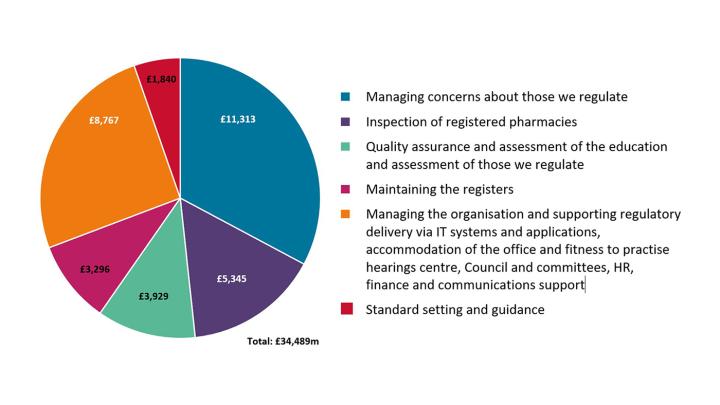
Our expenditure and what we do- our 2026/27 budget (in £ million)